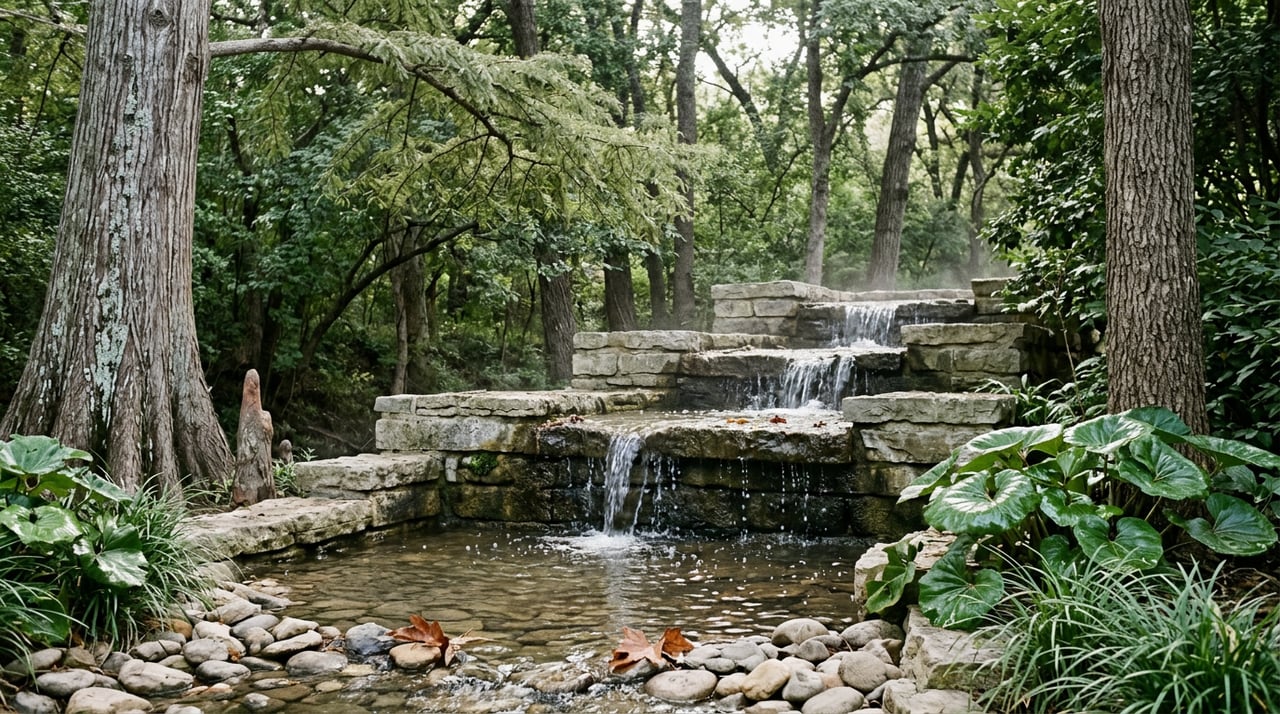
If you've walked the path past the Cedar Springs Cascade Waterfall anytime in the last several years, you probably stopped noticing it. Not because it wasn't there, but because it wasn't doing anything. The rock formation was still visible from the trail, still photographed by tourists who assumed a dry waterfall was just how it worked. Residents who've lived in the corridor long enough to remember otherwise knew better. As of this year, the water is moving again, and the Turtle Creek Conservancy has been fairly direct about why it stopped: nearly a decade out of operation, quietly, until a $300,000 restoration brought it back.
Turtle Creek Park's 20 acres between Oak Lawn, Uptown and the Katy Trail are covered by a 25-year stewardship agreement between the Conservancy and the City of Dallas, modeled on the Central Park Conservancy in New York. The city owns the land, while the Conservancy raises money for upkeep. Recent improvements have been supported by donor funding.
How Turtle Creek Park Is Funded
More than 44,000 people live or work within a one-mile radius of Turtle Creek Park, which makes it one of the more heavily used green spaces in the city relative to its size. The Conservancy raises money for tree care, irrigation, lighting, fountain upkeep and restoration projects, including several that have changed the park over the course of a single summer.
The funding model shapes how improvements move forward at Turtle Creek Park. A new fountain, a repainted bridge or a working waterfall depends on fundraising; some projects reach their targets quickly, while others remain open for years.
Two Waterfalls, Two Very Different Clocks
Here's a distinction most casual visitors miss entirely: Turtle Creek Park has two separate cascading water features, and they are not on the same schedule.
The Cedar Springs Cascade Waterfall, the one along the main path that just came back online, is finished. The Conservancy credits a $200,000 gift from Together for Good: The Salka Family Impact Group, combined with additional matching support, for covering the full $300,000 cost.
The Arlington Hall Cascades are a different water feature entirely, tucked into the park's northwest section near Arlington Hall itself, and that one is still an open ask. Dr. Thomas H. McConnell III has put up a 1:1 match of $100,000 to get the campaign moving, but as of this writing the Conservancy is still soliciting the matching half. If you've been waiting to hear the Cascades running again on your evening walk, that's the one still in progress, not the one that already reopened.
Knowing which project is complete and which is still fundraising helps clarify what has changed in the park.
Eight Bridges, One Ribbon-Cutting
The bridge work moved on its own timeline too, and it wrapped before the waterfall did. The Turtle Creek Association, the Conservancy, and the City of Dallas restored eight historic crossings along the corridor: Bowen Street (1916), Hall Street (1908, the oldest of the group), Lemmon Avenue (two separate crossings, dating to 1930 and 1963), Stonebridge Drive (1936), Blackburn Avenue (1930), Fairmount Street (1918), and Maple Avenue (1919).
The work included clearing dense undergrowth, repainting, lighting upgrades, retaining wall repairs, graffiti removal and pedestrian safety fixes. A ribbon-cutting was held on May 21, 2026, at the corner of Turtle Creek Boulevard and Bowen Street, with a reception at 10 a.m. followed by remarks from city and Conservancy leadership.
Like the Cascade Waterfall, the bridges were funded entirely through private philanthropy. No public construction dollars touched the project.
"This project is a powerful example of what can be accomplished when organizations come together around a shared vision."
That's JD Trueblood, president and CEO of the Turtle Creek Association, quoted in CW33's report on the bridge restoration. The restoration reflects coordination between the two nonprofits and donors.
The Newest Arrival Has a Corporate Name Attached
The most recent addition doesn't come from a family foundation. It comes from an insurer. The Conservancy is developing a National Fitness Court Studio® on the park's East Parcel in partnership with Blue Cross and Blue Shield of Texas, described as the first publicly accessible facility of its kind in a Dallas park. The plan includes free, year-round access to outdoor strength and conditioning equipment, an adjoining Infinity Golf putting experience, and a custom History Wall built into the installation to give the space some connection to the park's older story.
Visitors entering from the east are also seeing a new East Parcel Monument Sign, a gift from Claudia and Jerry Stool, meant to give that entrance a clearer identity.
What This Actually Means If You Live Here
The pattern across all of it, the waterfall, the bridges, the fitness court, the still-open Cascades campaign, is that Turtle Creek Park runs on a continuous fundraising cycle rather than a single capital budget. That's not a criticism. It's the same model that keeps Central Park in the condition it's in. But it does mean the park's condition at any given moment reflects which campaigns closed recently and which are still open.
This fall, the Conservancy will hold its Champagne Reception and Luminary Dinner, honoring the Hegi family as its 2026 Luminary Circle Honorees and Hillwood together with The Perot Companies as its Corporate Luminary Honoree.
If you've lived near the park long enough to remember the Cascade running the first time, the sound is probably a small thing to have back. If you moved in during the years it sat dry, you may not have known there was ever anything to miss. Either way, the corridor you walk today reflects donor-supported projects. That's worth knowing next time you cross the Bowen Street bridge and notice the new paint.
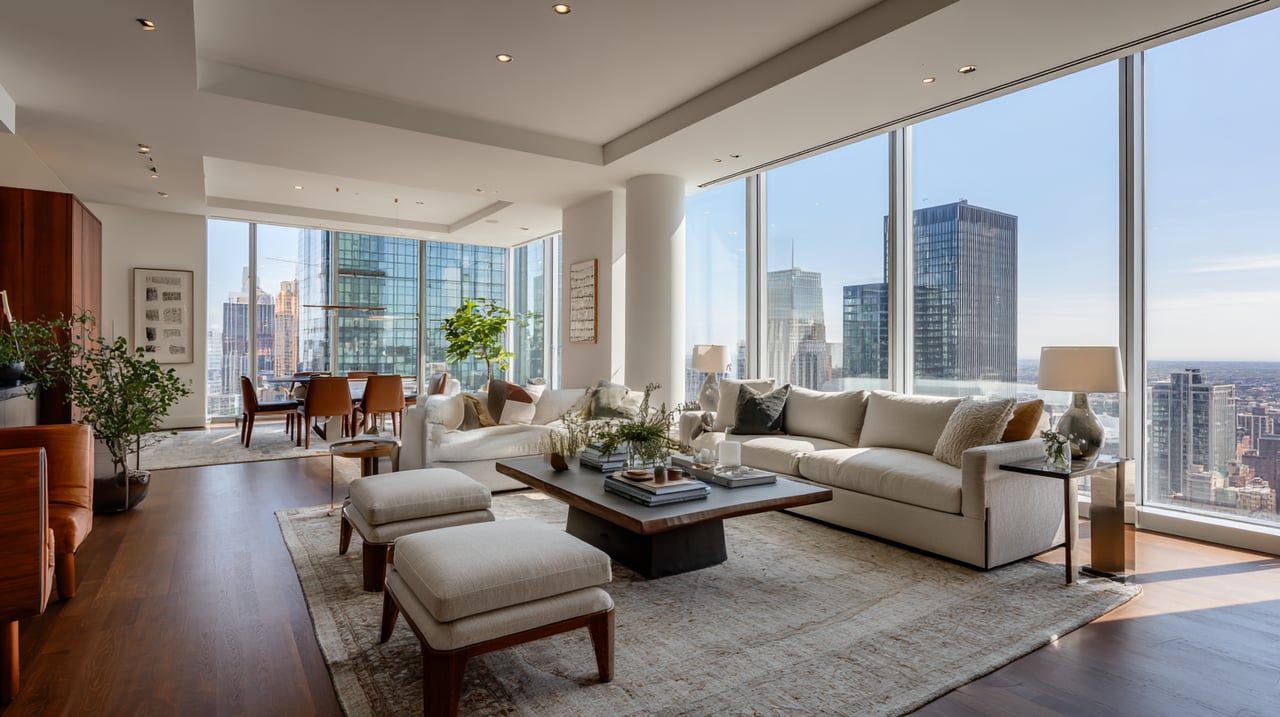
For those who live along this corridor and want a closer read on how these changes are shaping specific buildings and blocks, Sharon Quist has spent decades tracking the details that make Turtle Creek and its surrounding high-rises what they are. Request a private consultation with Sharon to talk through what's changing in your building, your block, or your building's HOA.